Over the years, I noticed that many churches managed important information using a combination of spreadsheets, WhatsApp groups, notebooks, PDFs, and scattered documents.
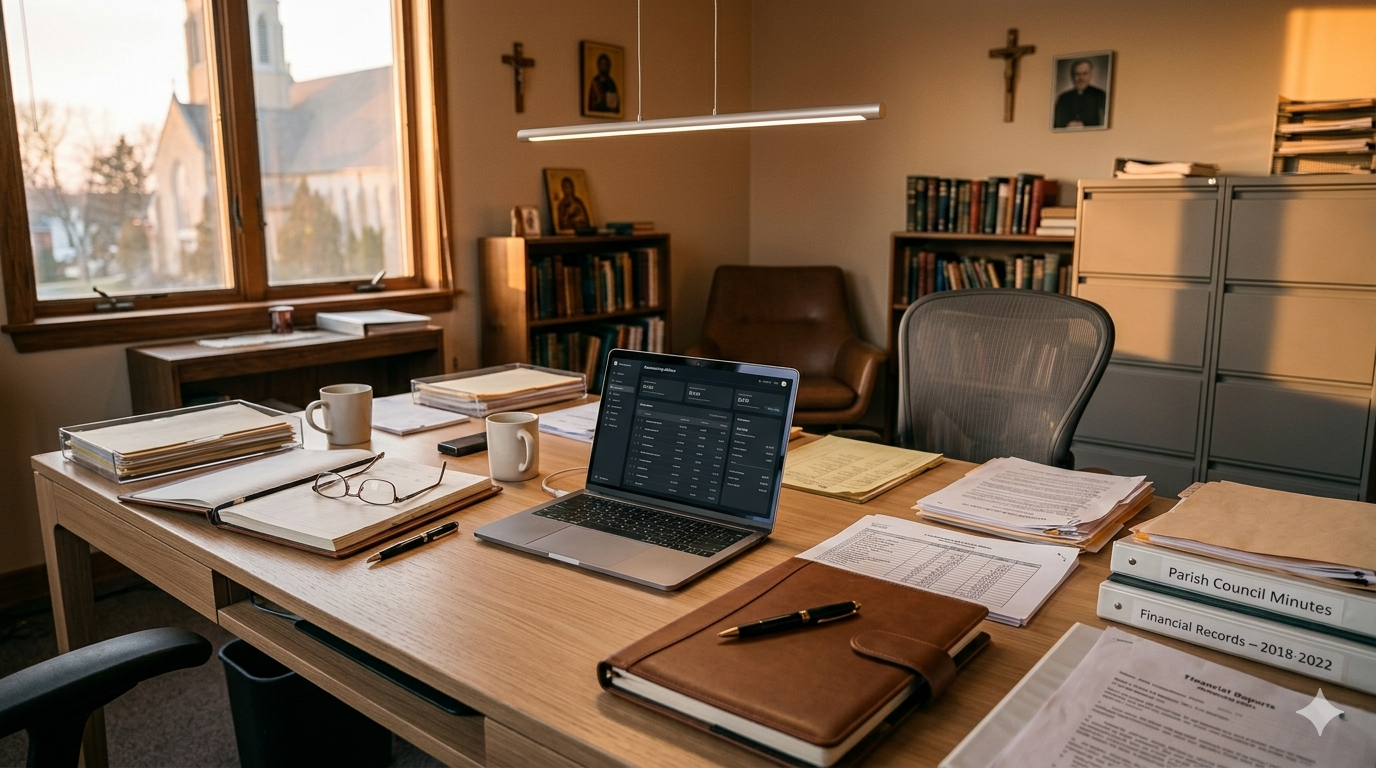
The problem wasn't technology.
The churches were operating.
People were getting the work done.
But a significant amount of administrative effort was spent searching for information, consolidating data, and preparing reports.
In many cases, knowledge became concentrated in a few people who knew where everything was stored.
Answering simple questions often required digging through multiple sources:
- How have donations changed over the past year?
- What is our current financial position?
- Which expenses have increased the most?
- How many members are actively participating?
That observation eventually led to Fidelis Church.
The goal was never to build a large ERP system or compete with enterprise platforms.
The objective was much simpler:
Make church administration easier.
Starting with the basics
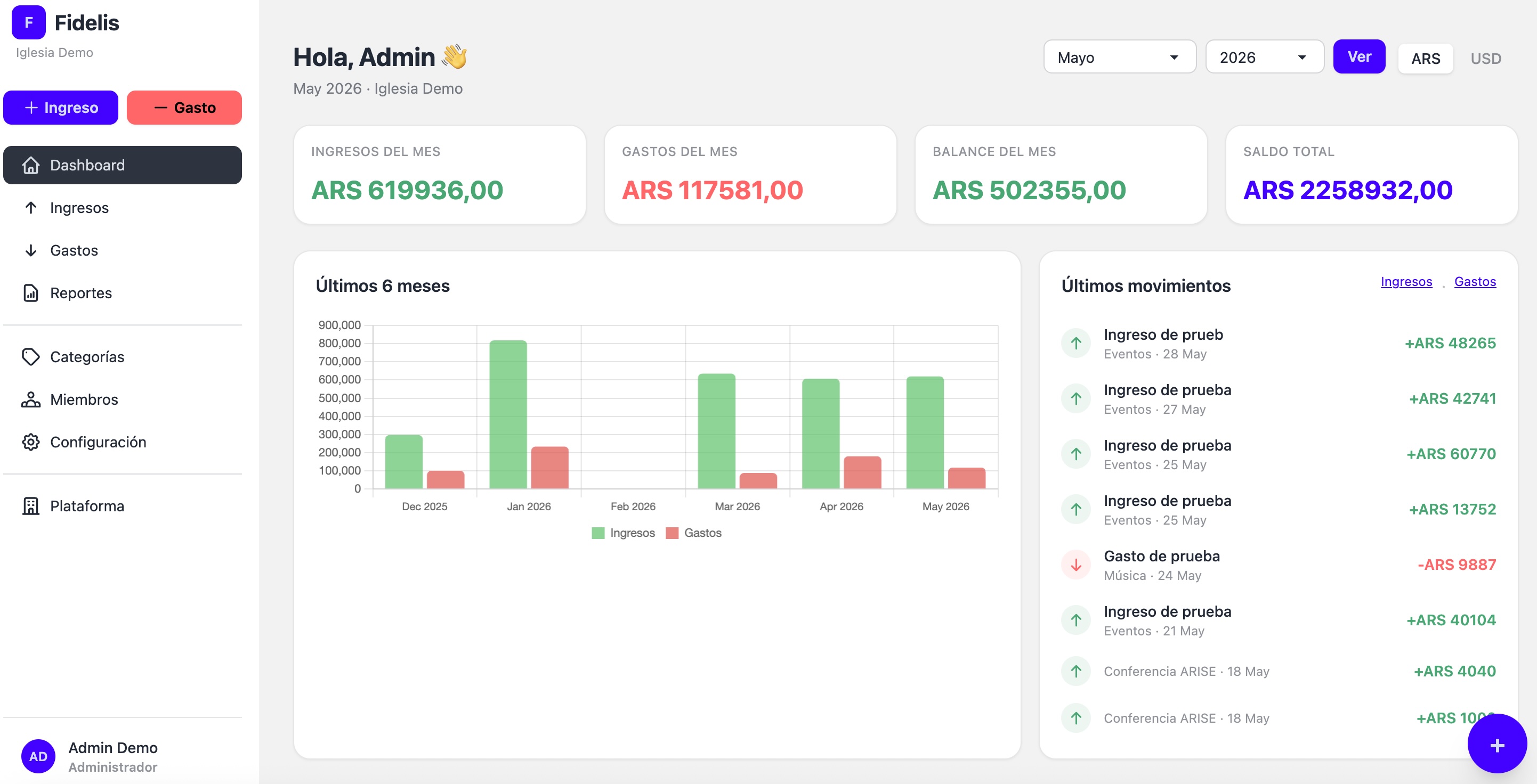
The first version focused on centralizing information.
Financial records, member data, events, and documentation could all be managed in one place instead of being spread across different files and tools.
The goal wasn't to add more features.
It was to reduce manual work.
When an organization can consistently capture and organize information, several benefits appear naturally:
- Less duplicated effort
- Fewer mistakes
- Better traceability
- Easier reporting
- Reduced dependency on a single person
The value of understanding the context
One lesson I've learned from building software is that the differentiator is often not the technology itself.
It's a deep understanding of the problem.
There are already many administrative tools available.
However, many small and medium-sized churches find them too complex, too expensive, or too generic for their specific needs.
Fidelis takes a different approach.
Instead of starting with a long feature list, it begins with understanding how church administration actually works day to day.
Validating before scaling
Today, Fidelis has a working version being used by a real church.
There are no paying customers yet.
And that's okay.
At this stage, understanding how people use the product and which problems it genuinely solves is more valuable than adding dozens of new features.
The most meaningful validation doesn't come from presentations or surveys.
It comes from daily use.
From observing what works, what creates friction, and what information people truly need.
Looking ahead
Today, Fidelis is primarily an administrative platform.
But it's interesting to think about where it could evolve.
First, centralize information.
Then, provide smarter reporting.
And eventually, use AI to help interpret data and prepare reports automatically.
Not to replace people.
But to reduce the time spent on administrative tasks.
For now, the focus remains the same as it was from the beginning.
Solve a real problem.
Because the best software products often don't start with a technology trend.
They start with a problem that someone has observed for a long time and finally decides to solve.
Explore Fidelis Church.
- Diego Cervera